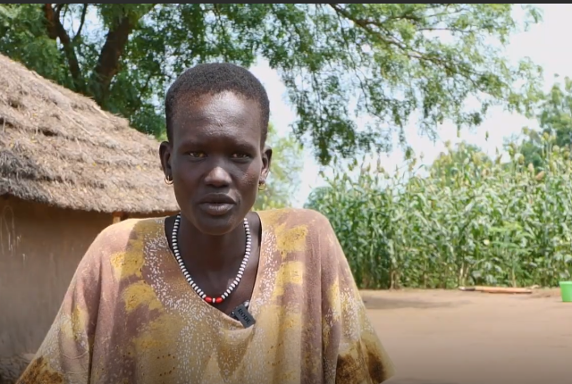

For ten years, Bidibidi refugee settlement has been home to thousands of South Sudanese families fleeing conflict and seeking safety in Uganda. Among them is Khot Elizabeth Chol, a 33-year-old mother of three, who arrived as a child escaping the horrors of war. Life in the settlement has not been easy, but her journey reveals how change can blossom even in the most difficult environments.
When Elizabeth got married and started her family, she quickly realized that much of the responsibility for their survival fell on her shoulders. She had to cook, clean, take care of the children, and at the same time struggle to raise money for school fees. Her husband, influenced by cultural norms from back home, believed domestic and child-related responsibilities were strictly for women. This left Elizabeth overwhelmed, stressed, and constantly worried about the future of her children.
“I felt like I was carrying the world alone. Every day was about finding food, struggling for school fees, and doing all the work at home. I was tired, and at some point, I had lost hope,” Elizabeth recalls.
The turning point came when UGANET introduced the SASA! methodology to Bidibidi. SASA!, a community mobilization approach, focuses on power dynamics in relationships and empowers men and women to reflect, question harmful cultural norms, and adopt healthier, more equitable ways of living. For Elizabeth, SASA! created a safe space where she could find her voice and begin speaking openly about the challenges she faced at home.
Through SASA! sessions, Elizabeth’s husband began to understand the importance of partnership in the family. Slowly, he started helping with household work and contributing to the children’s education. “At first, he thought I was just complaining, but when we both learned through SASA!, he saw that the responsibility of building a family should be shared,” she explains with a smile.
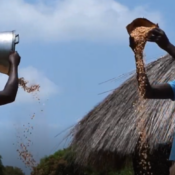
Today, the results speak for themselves. Elizabeth and her husband now share household responsibilities. Their three children are in school, something she once feared would never happen. Together, they cultivate a two-acre garden of sorghum, ensuring both food and a source of income. The stress that once weighed Elizabeth down has given way to happiness and hope.
For UGANET, Elizabeth’s story is a powerful testimony of what community-driven approaches can achieve in refugee settings. Caleb Ahabwe, from UGANET’s Ending Violence Against Women and Girls (VAWG) Department, emphasizes: “Elizabeth’s transformation shows us that changing harmful norms is possible when communities themselves are part of the solution. SASA! is not about telling people what to do, it’s about sparking reflection, dialogue, and action that makes families stronger.”
Elizabeth now sees herself not just as a wife and mother, but as a change agent in her community. She actively shares her story with other women in Bidibidi, encouraging them to speak up and challenge traditions that silence them. Her courage inspires families around her to adopt new ways of living.
As Elizabeth reflects on her journey, she adds, “I am no longer voiceless. I feel respected, supported, and hopeful for my children’s future. This change in my family is proof that when men and women walk together, life is better.”
Elizabeth’s journey is one of resilience, courage, and transformation. From carrying an unbearable burden alone to now enjoying shared responsibility and stability, she demonstrates the profound impact of empowering women and engaging men in the fight against gender inequality. Her story is not just her own; it is the story of what is possible when harmful cultural norms are challenged and equality takes root.